Case study · Built on spec

Sales reporting people actually read.

Kestrel is a reporting concept I designed, built, and presented to a company board: reps speak a two-minute voice check-in, leadership gets one clear dashboard, and the numbers are designed to stay tied to Salesforce instead of being re-keyed into slides.

Engraved field-guide illustration of an American kestrel
Falco sparverius
North America's smallest falcon
The problem

Reports nobody read, written by people who hated writing them.

A five-person sales team was assembling complicated PowerPoint updates and emailing them up the chain. The decks arrived late, read badly, and broke formatting every week. So leadership stopped reading them — and once reps noticed, they stopped putting effort in. Both sides lost sight of live projects.

The fix wasn't "more reporting discipline." It was making the report almost free to file and worth reading. The name? North America's smallest falcon hovers, watches, and doesn't waste a move. That was the spec.

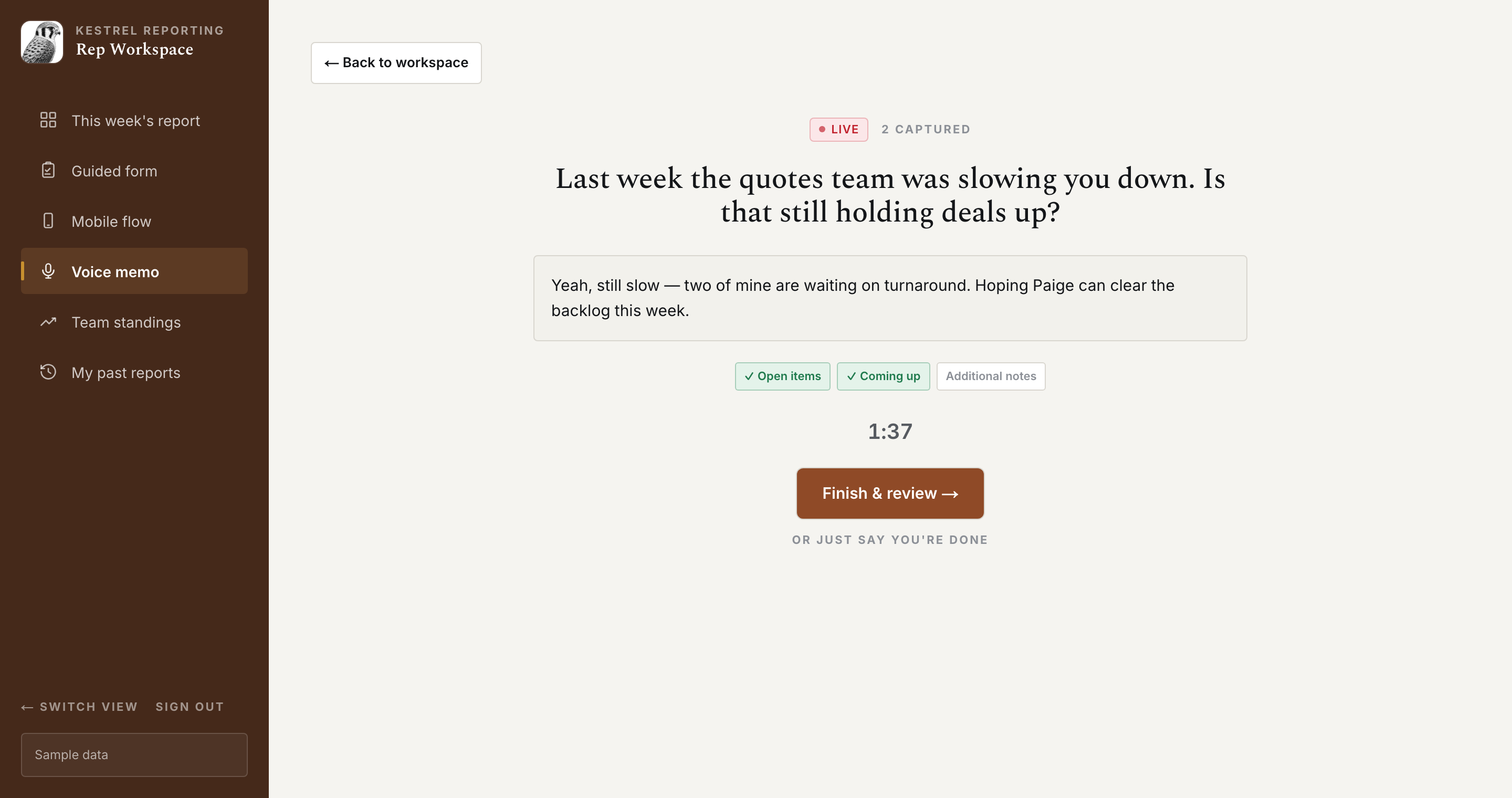
  1. Reps talk instead of type. A two-minute voice check-in with an AI agent replaces the weekly deck. The transcript becomes the update.
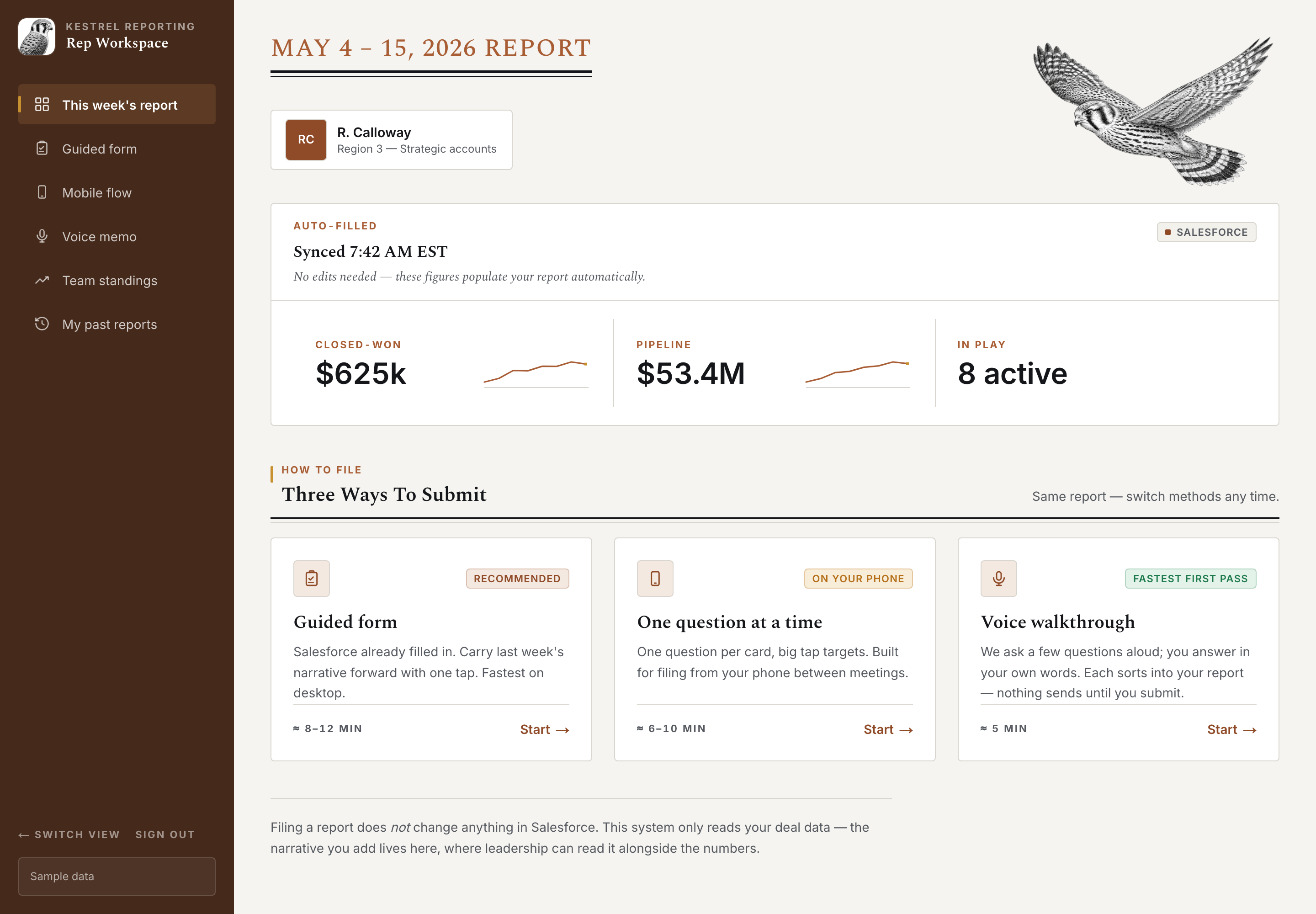
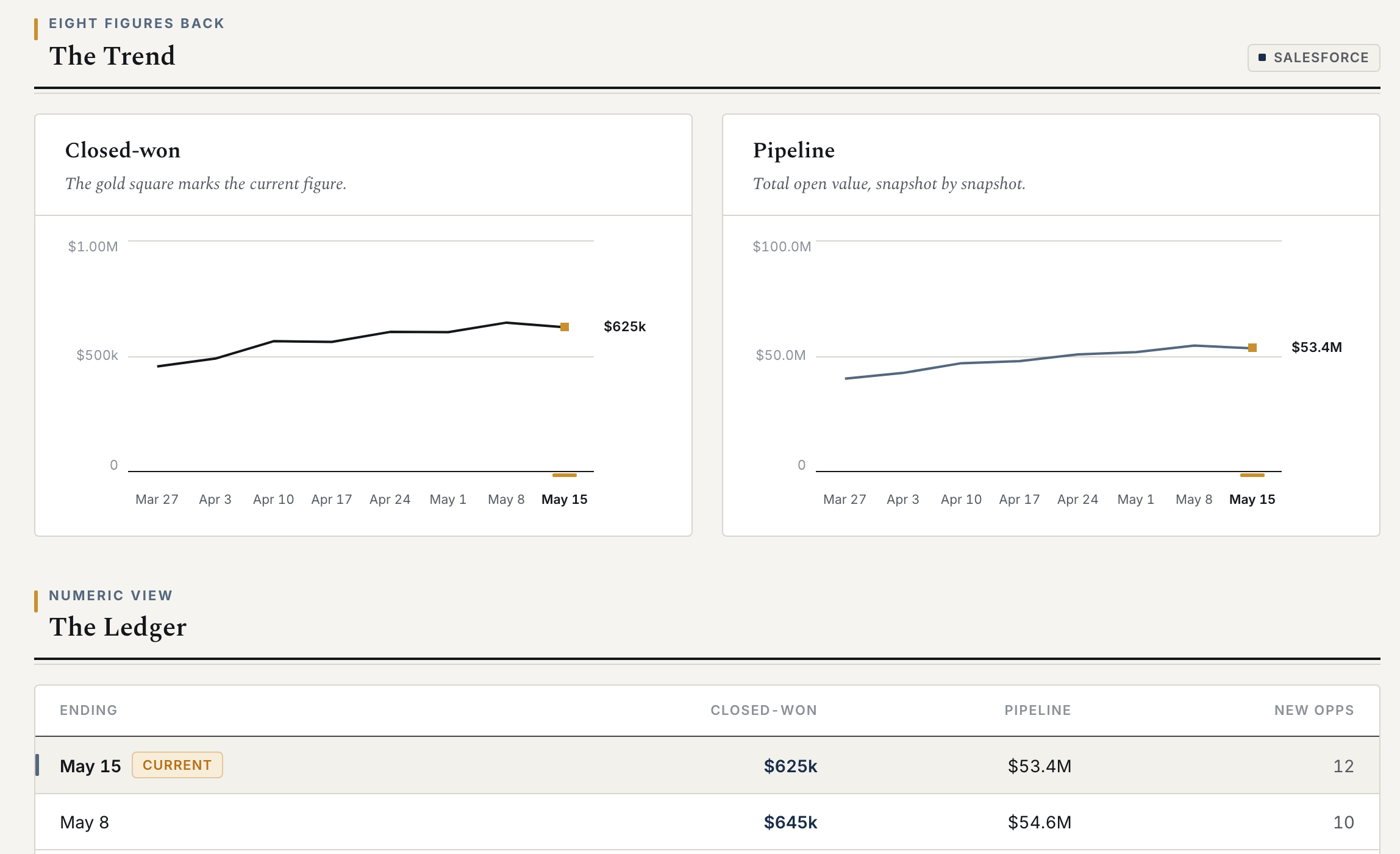
  2. Numbers come from the system. Figures come straight from the CRM — Salesforce in production, Salesforce-shaped sample data in the demo — so nobody re-keys totals or argues about whose number is right.
  3. Leadership gets one view. An executive hub compares reps and projects side by side, with an AI-drafted weekly brief that links back to its sources.
The screens

A working demo, not a slide deck.

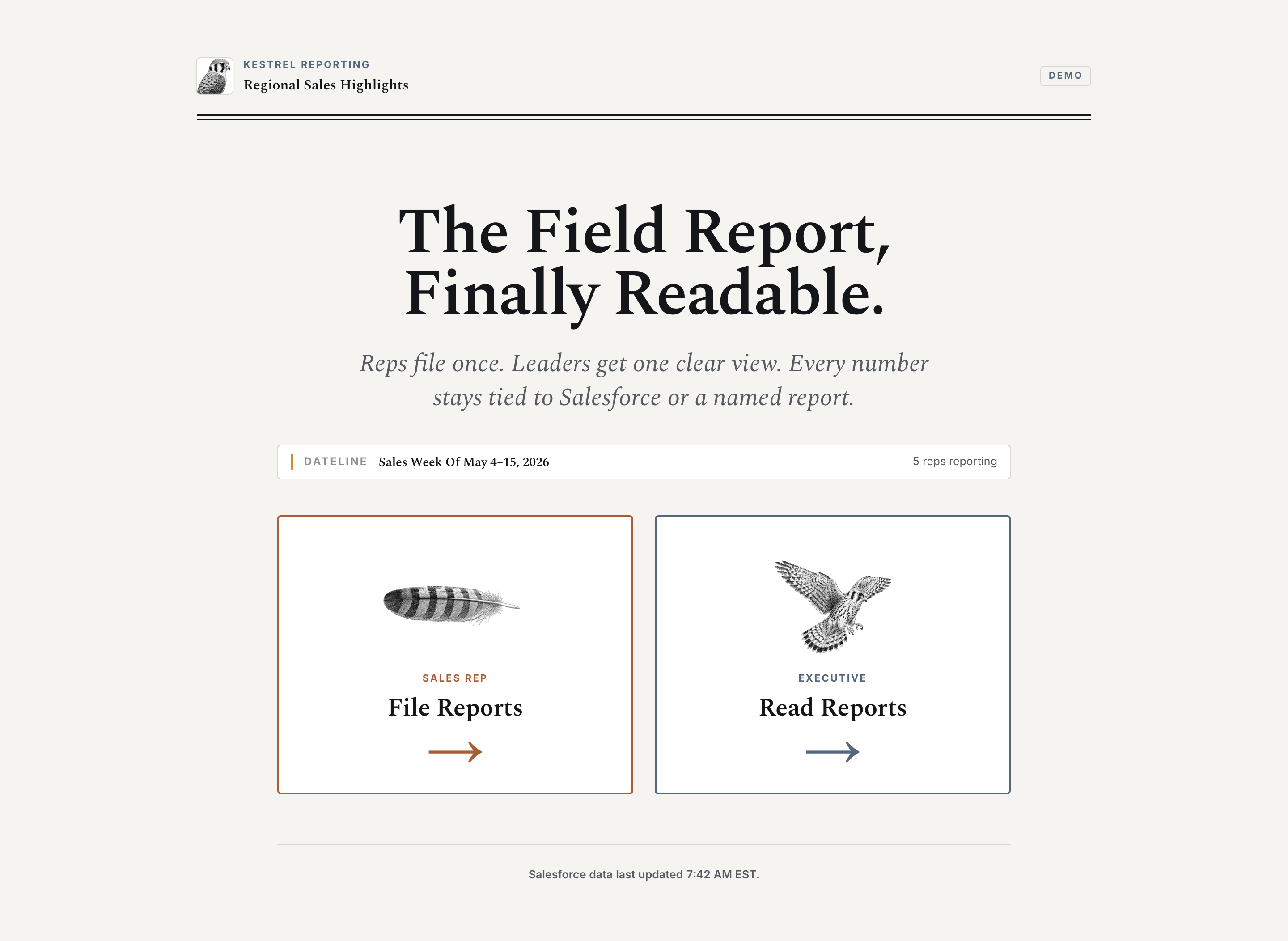
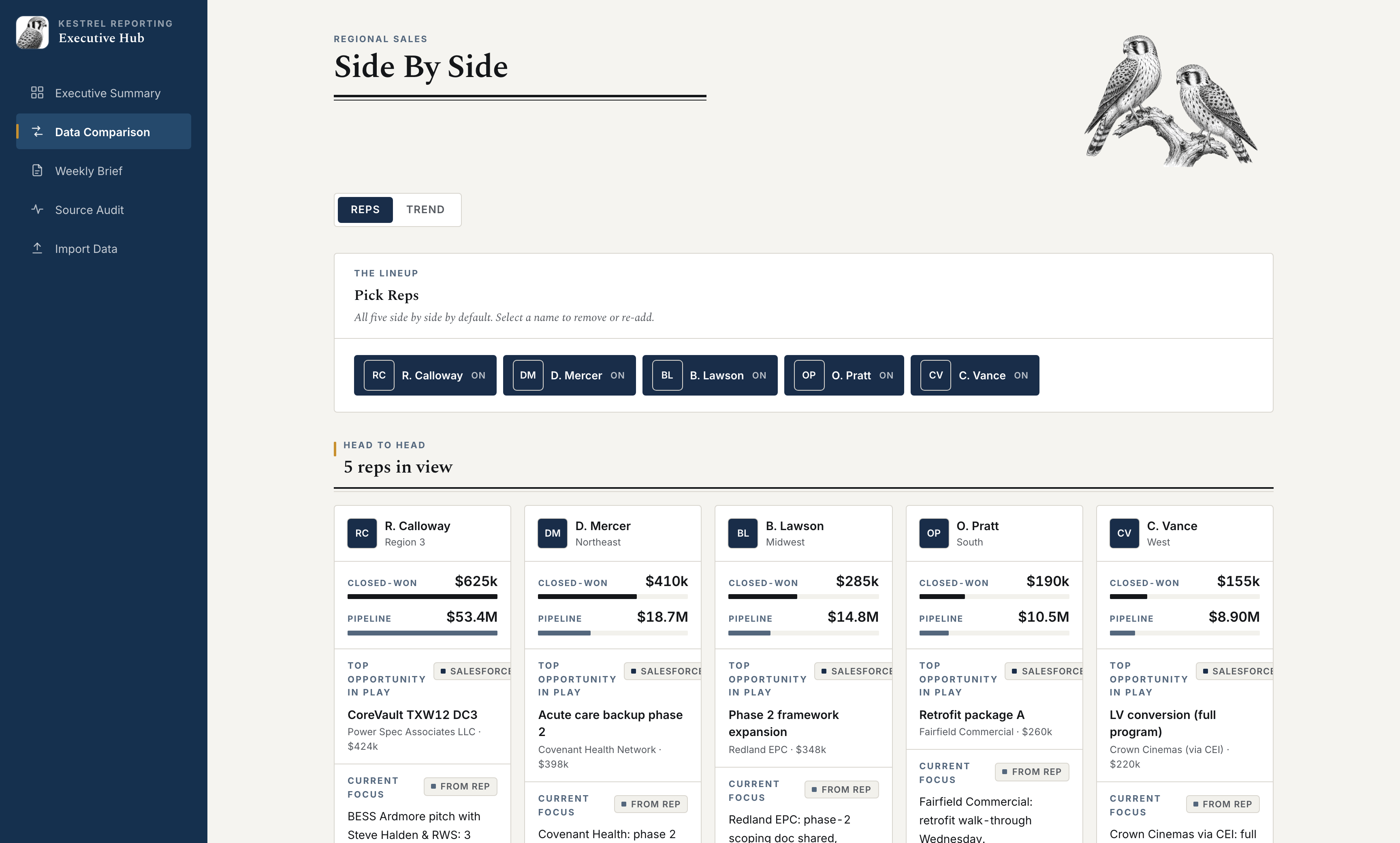
Every screen below is a real screenshot from the demo interface. Tap any image to see it full size.

Kestrel executive hub comparing five sales reps side by side with closed-won and pipeline figures
Executive hub. Five reps side by side: closed-won, pipeline, top opportunity, and each rep's own words.
The honest part

Where the demo ends and production begins.

Kestrel today is a working demo on realistic sample data. There's no live Salesforce connection yet and sign-in is illustrative — by design, so stakeholders could evaluate the idea before paying for plumbing.

I put this caveat on the website on purpose. If I'll say it to a board, I'll say it to you: you should always know exactly what's real, what's mocked, and what it costs to close the gap.

For the technically curious — the part your IT team will want to vet:

Built with Next.js, React, and TypeScript, deployed on Vercel. Charts are hand-drawn SVG — no heavyweight libraries to license or maintain.
The AI layer The demo includes an OpenAI Realtime voice-agent path for check-ins; a language model drafts the weekly brief. Both are thin, clearly labeled, and source-checked against the data.
The production plan Live Salesforce API, a managed Postgres database, Microsoft Entra sign-in, and AI moved in-tenant through Azure OpenAI with contractual data-retention controls.
What Kestrel says about working with me: I look for the actual problem (theirs wasn't "no data" — it was reports nobody read), I build the smallest thing that proves the idea, and I'm plain about what's demo and what's production.
Bring your version of this

Have a Kestrel-shaped problem?

A report nobody reads, a process nobody loves, a tool nobody sells — tell me about it and we'll see if a small build fixes it.

The button opens an email — or write to realiansteven@gmail.com. I reply within one business day.